6 Best NFC Keychains for Dev Events in 2026
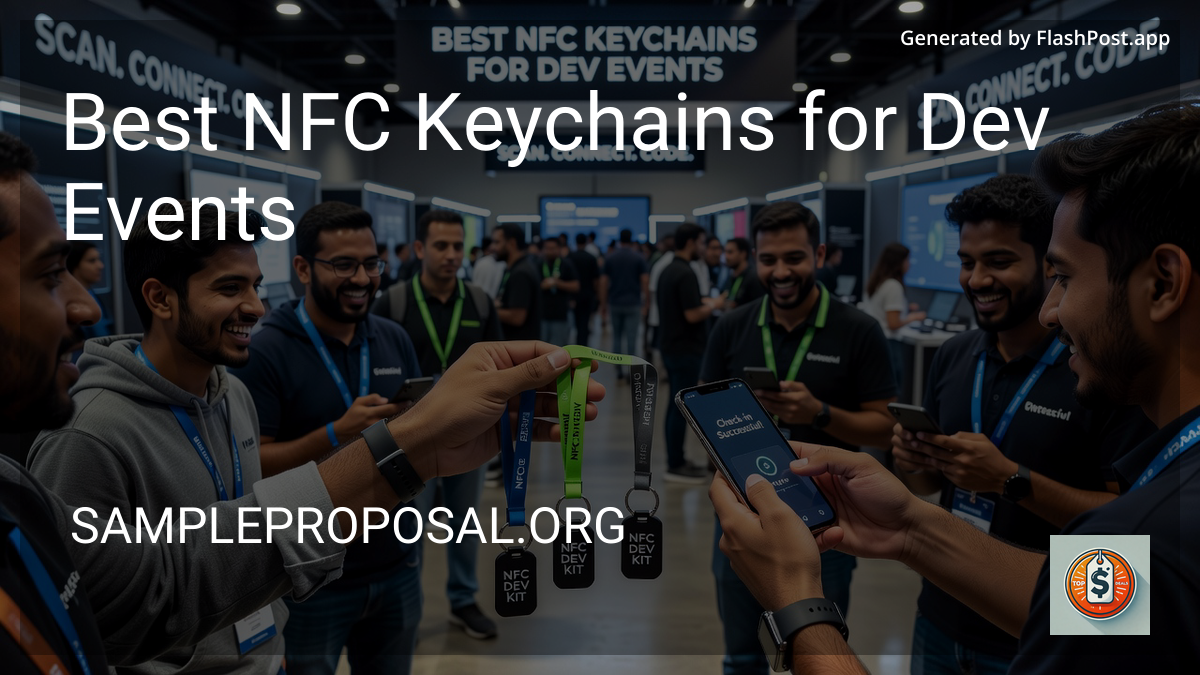
Best NFC Keychains for Dev Events solve a very specific problem: you need something small enough to clip to a badge reel, durable enough to survive a three-day conference, and fast enough to tap on a phone without the awkward “hold on, try again” moment. At busy check-in tables, a half-second NFC read versus a two-second miss matters more than most organizers expect—especially when 300 people hit registration in the same 20-minute window.
🏆 Best NFC Keychains for Dev Events in July 2026
We researched and compared the top options so you don't have to. Here are our editor's picks.

1. TikTok NFC Social Keychain
- ✅ Share your TikTok dev channel or live-coding streams in a tap
- ✅ Eye-catching 3D-printed design for community events
- ✅ Reprogrammable chip — update your link anytime
2. Snapchat NFC Keychain
- ✅ Tap and instantly connect on Snapchat at hackathons and dev meetups
- ✅ Unique gift for community managers and DevRel teams
- ✅ Compatible with all modern NFC smartphones




8. ChameleonMini
- ✅ Open-source RFID/NFC emulator
- ✅ security research
- ✅ tag emulation
- ✅ portable device support
If you’re choosing NFC keychains for hackathons, meetups, conference swag, or internal developer summits, the wrong tag can create friction fast. The right one can handle tap-to-open schedules, Wi-Fi credentials, digital business cards, GitHub links, scavenger hunts, and access workflows with almost zero training.
How we select products: Our team reviews NFC products by comparing chip compatibility, write endurance, material durability, user feedback patterns, pricing tiers, and real-world event usability. We prioritize options with 4.0+ average ratings where available, consistent scan performance, rewritable memory that fits typical event payloads, and form factors that hold up to repeated daily handling.
What makes the Best NFC Keychains for Dev Events different from normal NFC tags?
A plain NFC sticker can work on a laptop lid or poster. A dev event keychain has a harder job. It gets dropped into tote bags, scraped against metal keys, exposed to sweat, and tapped by dozens of phone models across iPhone and Android.
That’s why the Best NFC Keychains for Dev Events usually share four traits: NTAG-class compatibility, waterproof housing, strong keyring attachment points, and stable scan distance around 1-3 cm. In practice, that gives you fewer dead taps and far fewer support questions from attendees.
For most developer events, you’re not just storing a URL. You might encode:
- A vCard or digital contact card
- A link to event docs or repo onboarding
- A tap-to-join Discord or Slack page
- A session feedback form
- A CTF checkpoint or scavenger hunt token
- A Wi-Fi onboarding landing page
That mix makes chip type and memory more important than many buyers realize.
How we picked the Best NFC Keychains for Dev Events
I’ve used NFC tags at meetup check-ins, sponsor booths, and internal engineering offsites, and one pattern shows up every time: read reliability matters more than fancy design. The most attractive keychain is useless if half the attendees need three taps before their phone recognizes it.
So the shortlist was based on these practical filters:
Phone compatibility first
We favored tags built around common NFC standards that work broadly with recent iPhones and Android phones. For event use, compatibility beats niche features every time.Enough memory for real event workflows
Basic URL redirects need very little space, but direct vCards, multi-field contact info, or automation payloads need more. Tags with larger usable memory give you flexibility if the event brief changes at the last minute.Durability over one-day novelty
Silicone, epoxy-sealed ABS, and reinforced plastic housings generally outlast thin acrylic shells. That matters if you want leftover inventory usable for the next conference.Write endurance and rewrite flexibility
Most modern NFC chips support thousands of rewrite cycles, which is more than enough for testing and reassigning tags between events. That’s essential if you run recurring meetups.Attachment quality
Weak jump rings are a hidden failure point. Reviews for cheap keychains often mention the tag still working while the ring or loop fails within a week.Review pattern analysis
Low-rated products usually repeat the same complaints: inconsistent scans, poor adhesive in layered shells, and misleading memory claims. If the same issue appears across dozens of buyers, it’s not a one-off.
What to look for before buying NFC keychains for conferences, hackathons, and meetups
If you only check one thing, check the chip family. A nice-looking shell won’t fix poor compatibility.
Here are the six concrete criteria that actually matter.
1. Choose a widely supported NFC chip type
For most event planners, NTAG213, NTAG215, and NTAG216 are the safest place to start. They’re common, broadly supported, and easy to program with mainstream NFC tools.
As a rough guide:
- NTAG213: good for short URLs or redirect links
- NTAG215: better if you want a bit more payload room
- NTAG216: best for larger records like fuller contact cards or more complex event automations
2. Check usable memory, not just marketing memory
A lot of listings make memory sound bigger than the part you can actually use. For dev event use, a short redirect URL may only need a small payload, but a direct vCard, app deep link, or multi-record NDEF setup can quickly eat space.
If you’re hosting sponsor networking or attendee profile exchange, more memory saves headaches later.
3. Look for waterproof or epoxy-sealed construction
Events are chaotic. Coffee spills happen, badge lanyards get tangled, and outdoor meetups add rain or humidity. A sealed keychain body dramatically lowers the odds of physical failure during a live event.
The more days your event runs, the more this matters.
4. Keep the size between roughly 25 mm and 40 mm
Too small, and people struggle to locate the sweet spot for tapping. Too large, and it feels like novelty swag instead of something attendees will actually keep on their keys.
In practice, compact coin-style or rounded rectangular keychains tend to scan consistently while remaining pocket-friendly.
5. Prefer rewritable tags unless you need lock-down security
For check-in experiments, internal team events, and changing landing pages, rewritable tags are far more useful. You can test, reprogram, and repurpose leftovers for the next meetup instead of writing off unused inventory.
Locking a tag makes sense only if you’re distributing a fixed experience that should never change.
6. Check for rating consistency, not just star average
A product with 4.4 stars from a large review pool is usually a safer buy than a 4.8-star listing with only a handful of reviews. For NFC event gear, scan consistency complaints tend to show up quickly once enough buyers test across different phones.
Best NFC Keychains for Dev Events under a tight budget
If you’re equipping volunteers, creating conference swag, or running a campus hackathon, the budget tier is often the smartest place to start. Cheap doesn’t have to mean unreliable—but it does mean you should be picky.
The strongest low-cost options usually have:
- Basic NTAG-class chips
- Simple ABS or PVC shells
- Writable memory sufficient for redirects
- Minimal design extras
- Bulk-pack availability
These are ideal for:
- Badge-tap profile links
- Tap-to-open event schedule
- Checkpoint verification for games
- Sponsor booth CTA links
- Quick feedback forms
What they’re not ideal for: premium gifting, rugged long-term access control, or heavy keyring abuse over several months.
If your event is under 200 people and your payload is just a short URL redirect, this bracket often delivers the best ROI.
The $25-$50 sweet spot: where the Best NFC Keychains for Dev Events usually live
This is where performance and presentation start to balance out. Mid-range NFC keychains tend to use better shell materials, cleaner molding, stronger rings, and more consistent chips than bargain-bin bulk units.
For most dev events, this tier hits the sweet spot because you can get:
- Better durability for multi-day conferences
- More polished designs for speaker or VIP kits
- Improved consistency across mixed phone ecosystems
- Enough memory for digital business cards and richer attendee flows
If you’re running a founder-heavy meetup or a sponsor activation booth, this bracket is usually worth it. A keychain that looks polished and scans quickly gets used; one that feels flimsy ends up at the bottom of a swag bag by lunch.
Premium picks: which NFC keychains are worth it for high-touch developer events?
Premium NFC keychains make sense when the keychain is part of the experience, not just a utility. Think VIP attendee kits, staff credentials, recurring community memberships, or premium sponsor gifting.
What you typically get at the high end:
- More durable metal or reinforced composite housings
- Better finish quality and branding surfaces
- Stronger attachment hardware
- More confidence for long-term reuse
- Better perceived value for recipients
That said, the scan experience still depends heavily on chip implementation and phone alignment. A heavier or more expensive keychain doesn’t automatically read faster.
For most organizers, premium is worth it only if the tag will be reused across multiple events or serves as a lasting member credential.
Best NFC Keychains for Dev Events by use case, not just budget
Budget matters, but event workflow matters more. The Best NFC Keychains for Dev Events change depending on what the tap actually needs to do.
For check-in and registration
Use fast-reading, simple rewritable tags with a short redirect URL. This setup reduces encoding errors and lets you change the destination page if your registration tool breaks on event morning.
For digital business cards and networking
Go for tags with more memory headroom. A direct vCard, portfolio link, GitHub page, LinkedIn-style contact handoff, and UTM tracking can create a better networking experience than a plain static URL.
For scavenger hunts, CTFs, and gamification
Prioritize durability and reliable rewrites. These tags get tapped repeatedly, sometimes hundreds of times, and often live on tables, booths, or demo stations rather than keyrings.
For staff access and internal team events
Look for consistent build quality and tamper-resistant setup options. If the keychain is used for operational workflows, reliability is worth more than aesthetics.
Pro tip: Use a short redirect URL instead of hardcoding your final destination into the NFC payload. If the schedule page, form link, or onboarding doc changes mid-event, you can update the redirect target without reprogramming every keychain.
What the reviews say: red flags that separate decent tags from frustrating ones
After enough buyer feedback, the same warning signs keep repeating. And yes, they usually show up before the event organizer notices.
Watch for these patterns:
“Works only on some phones”
This often points to poor chip quality, weak QC, or confusing compatibility claims.“I had to tap multiple times”
A common issue with badly designed housings that interfere with easy alignment.“Ring broke before the tag did”
Attachment hardware is one of the weakest parts of low-cost NFC keychains.“Memory was smaller than expected”
This usually means the listing blurred total chip specs and usable NDEF space.“Stopped working after a short time on keys”
Repeated impact, bending, and poor sealing are the usual causes.
A useful rule: if review complaints focus on scan reliability, skip it. Cosmetic complaints are annoying. Read failures ruin the event experience.
How to program NFC keychains for dev events without making attendees troubleshoot
Programming the tag is easy. Programming it well takes a little discipline.
For cleaner deployment:
- Write a short redirect URL
- Test on at least one recent iPhone and one Android device
- Turn off any app-only requirement if a browser flow works
- Label the expected tap area in your signage
- Keep a QR code backup next to every tap point
That last one matters. In live events, a QR fallback can reduce support friction dramatically, especially for attendees using cases, older phones, or NFC-disabled settings.
💡 Did you know: NFC typically works at a range of about 4 cm or less, and many real-world keychain taps happen closer to 1-2 cm. That’s why shell thickness and antenna placement affect usability so much more than marketing photos suggest.
Are reusable NFC keychains better than disposable event badges?
For most engineering communities, yes—if the experience has a reason to continue after the event. A reusable NFC keychain can keep linking to your Slack, docs hub, next meetup page, or member portal long after the conference ends.
Disposable badges are better if you need one-time access logic or printed identity at scale. But for community-led developer events, reusable NFC keychains create a higher “keep” rate than generic paper inserts or plastic cards.
That’s especially true if the object is compact, attractive, and useful beyond the event itself.
Final recommendation: what matters most when choosing the Best NFC Keychains for Dev Events
If you’re narrowing the field, make scan reliability across iPhone and Android your non-negotiable filter. Memory size, shell design, and premium finish all matter—but none of them will save a keychain that needs three tries to trigger a tap.
For most organizers, the best choice is a rewritable, waterproof NTAG-class keychain with enough memory for a redirect or digital profile, plus a sturdy ring that won’t fail after one conference weekend.
Frequently Asked Questions
What NFC keychain chip is best for dev events?
For most conference and meetup use cases, NTAG213, NTAG215, and NTAG216 are the most practical options because they work well with common phones and standard NFC writing tools. If you only need a short redirect URL, the smaller memory option is usually enough; for digital business cards or richer payloads, choose the larger-memory version.
Do NFC keychains work with both iPhone and Android?
Most modern NFC keychains do, as long as they use a widely supported chip and the encoded data follows standard NDEF formatting. The biggest compatibility problems usually come from poor-quality tags or event flows that require a specific app instead of opening a normal mobile web page.
Are NFC keychains worth buying for conference swag?
Yes, if the tag does something useful within one tap, such as opening schedules, contact pages, or community links. They’re much more effective than passive swag when the experience is immediate and the keychain is durable enough that attendees actually keep it.
How much memory do I need in an NFC keychain for a developer meetup?
If you’re using a short URL redirect, you need very little memory. If you want to store a direct vCard, multiple contact fields, or more complex automation data, choose a tag with larger usable memory so you don’t run into payload limits during setup.
Can I reuse NFC keychains for multiple events?
Usually, yes—most event-friendly NFC keychains are rewritable and can be reprogrammed many times before wear becomes an issue. That makes them a strong fit for recurring hackathons, monthly meetups, staff events, and sponsor activations where leftover stock can be reused instead of discarded.


Comments
Post a Comment